01— Capabilities

WHAT WE RUN,
AND HOW IT RUNS.

Two granulation lines, a full coating suite, an analytical lab, and bag-line fulfillment — under one roof in Cookeville. Every number here is what we quote against.

2Production lines
0.3–4mmGranule envelope
4Industries served
20k ft²Floor
02— Production Lines

TWO TRAINS,
OPPOSITE ENDS OF THE SPECTRUM.

Pin Mixer → Fluid Bed DryerLINE 1

Pin Mixer → Fluid Bed Dryer

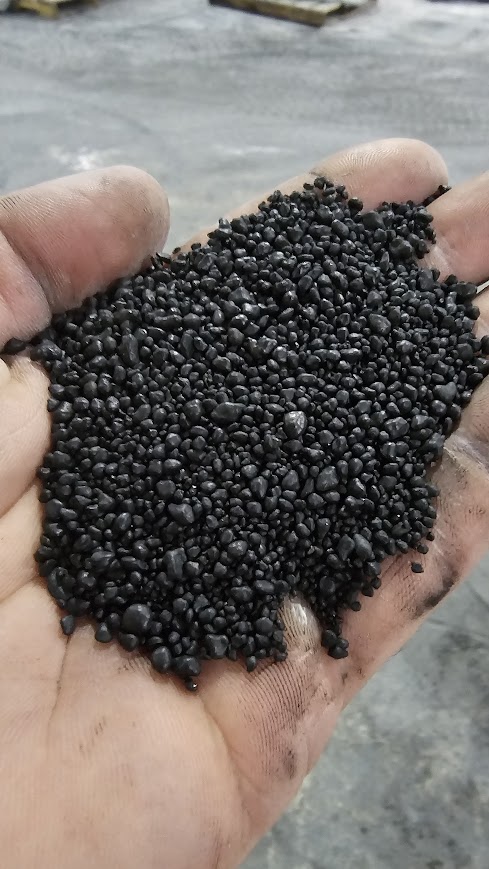
Our precision line for fines. The pin mixer densifies and micro-granulates; the fluidized bed dries inline at low temperature to protect biologicals and coatings.

Granule size
≤ 1.0 mm
SGN window
30 — 100
Drying
Inline fluid bed 40–120 °C
Residence
418 min
Moisture out
< 2%
Bio viability
Preserved (low-temp)
Ideal forBiologicals · micronutrients · dust-controlled powders
Disc → Rotary DrumLINE 2

Disc → Rotary Drum

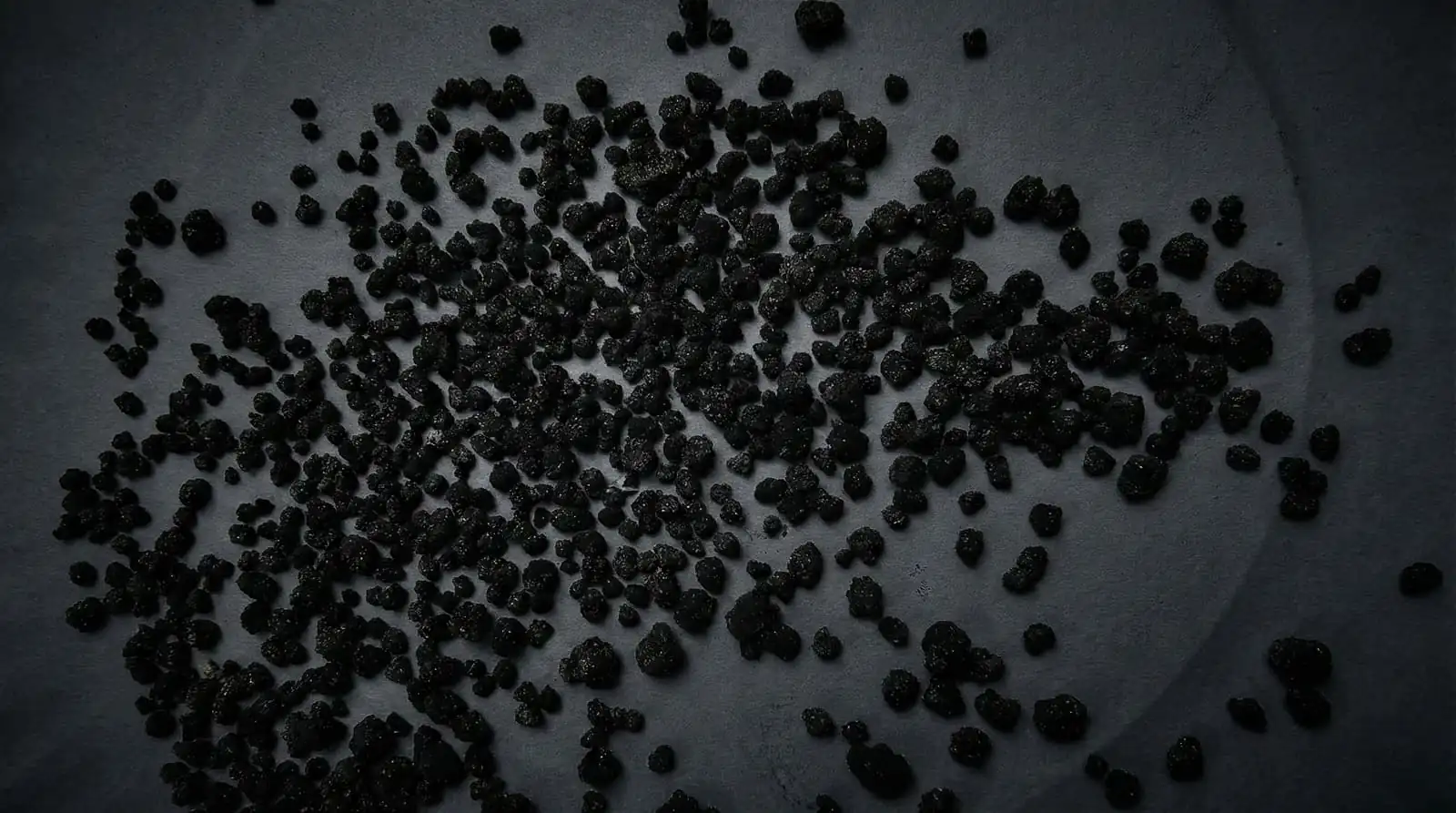
Our high-volume agglomeration train. Material is seeded on the disc pelletizer, then rounded and grown in the rotary drum to a tight, free-flowing granule.

Granule size
≥ 0.5 mm
SGN window
50 — 400
Granule form
Rounded, free-flowing
Crush strength
≥ 2.5 kgf
Batch range
120+ tons
Ideal forFertilizer blends · filtration media · construction additives
02— Capability Matrix

TWO PRODUCTION LINES,
ONE SHOP FLOOR.

Two granulation lines sized for opposite ends of the particle spectrum, plus the coating, blending, packaging and lab operations around them. Every spec below is what we’ll quote against — not a marketing range.

L1

Disc → Rotary Drum

Granule size
≥ 0.5 mm
SGN
50 — 400
Form
Rounded granule
Crush strength
≥ 2.5 kgf
L2

Pin Mixer → Fluid Bed

Granule size
≤ 1.0 mm
SGN
30 — 100
Drying
Inline 40–120 °C
Moisture out
< 2%
CT

Controlled-Release Coating

Polymers
PU · PA · biodeg.
Sulfur
Y
Release window
30120 d
Dust control
Oil topcoat
BL

Blending & Agglomeration

Mode
Wet · Dry
Vessels
500 L4,000 L
Binders
PVA · Lignin · Starch
Inerts
Y
PK

Bagging & Bottling

Bag size
5 lb · 50 lb · 1 mt
Bottle
4 oz2.5 gal
Labeling
State-Ag review
Pallet wrap
Y
QA

Analytical Lab

Crush
Force gauge
PSD
Sieve · Camsizer
Moisture
Karl Fischer
Bulk dens.
ASTM D7481
REF. CAP.MTX / 26.05Full equipment spec sheet
04— Coating Systems

FOUR WAYS
TO METER A RELEASE.

From premium biodegradable encapsulation to cost-led sulfur coats — matched to your agronomy and your price point.

CT-01

Polymer Encapsulation

Release
30–120 d
Chemistry
PU · PA
Use
Controlled-release N
CT-02

Biodegradable Coat

Release
45 d
Chemistry
Bio-polymer
Use
TERRACOTE™ class
CT-03

Sulfur / Wax

Release
30–60 d
Chemistry
Elemental S · wax
Use
Cost-led SRF
CT-04

Oil Dust-Control

Coverage
Surface film
Chemistry
Mineral / veg oil
Use
Anti-dust topcoat
05— Analytical Lab

WE TEST
BEFORE WE SHIP.

Every campaign exits with a Certificate of Analysis. In-house instrumentation means we catch a spec drift on the floor, not at your dock.

Crush strength
Force-gauge, per ASTM D6175
Particle size
Sieve stack + optical (Camsizer)
Bulk density
ASTM D7481
Moisture
Karl Fischer + LOD
Flowability
Angle of repose
06— Packaging & Fulfillment

MARKET-READY,
OFF OUR DOCK.

Bagging, labeling, warehousing and drop-ship — so the pallet that leaves us is the unit your customer receives.

Bagging
5 lb · 25 lb · 50 lb · 1 mt tote
Bottling
4 oz – 2.5 gal liquid
Labeling
State-Ag label compliance review
Warehousing
Climate-stable, racked
Logistics
LTL · FTL · DTC drop-ship · export
— Common Questions

WHAT BUYERS ASK FIRST.

What is toll manufacturing for granulated products?

Toll manufacturing is an arrangement where the client owns the formulation and the manufacturer supplies the plant, equipment and labour to produce it. Renovo runs two granulation lines in Cookeville, Tennessee, taking a client formula from bench samples through to 20+ ton commercial campaigns. The client keeps the formulation and pays a conversion fee per unit produced, with no capital outlay.

What is the difference between a pin mixer and a disc granulator?

A pin mixer uses a high-speed shaft with pins to densify powder and binder into small, fast-formed granules, typically under 1.0 mm and SGN 30–100. A disc granulator uses an inclined rotating pan that grows granules layer by layer, producing larger, rounder particles from 0.5 mm upward at SGN 50–400. Pin mixers suit fines and biologicals; discs suit high tonnage.

What granule sizes can Renovo produce?

Renovo produces granules from 0.3 mm to 4.0 mm, which corresponds to roughly SGN 30 through SGN 400. The pin mixer line covers the fine end at SGN 30–100 with granules at or below 1.0 mm. The disc and rotary drum line covers SGN 50–400 at 0.5 mm and above, with crush strength at or above 2.5 kgf.

What is SGN in fertilizer granulation?

SGN stands for Size Guide Number, the fertilizer industry's metric for granule size. It is the median particle diameter in millimetres multiplied by 100, so SGN 250 means a median granule of 2.5 mm. Blend components should sit within roughly 10 percent SGN of each other to avoid segregation in the bag and uneven spread in the field.

Does Renovo offer controlled-release coating?

Yes. Renovo applies four coating classes to finished granules: biodegradable polymer encapsulation, conventional polymer, sulfur, and oil or wax dust-suppression coats. Coating is applied inline after granulation and drying, so a client can move from raw powder to a coated, bagged, controlled-release product on a single purchase order without shipping intermediate material between vendors.

What is the minimum order for toll granulation?

Renovo starts at 5 lb bench samples for formulation development and feasibility, then scales through pilot quantities to commercial runs of 1 to 20+ tons per batch. There is no requirement to commit to commercial tonnage before the bench and feasibility stages confirm the material granulates, dries and holds spec.

08— Engage

SEND THE SPEC.
WE’LL QUOTE THE PROCESS.

Project intake takes ten minutes. We’ll counter with a bench-stage plan, a cost window, and a calendar.

RENOVO LLC1410 IMPERIAL DR · COOKEVILLE TN 38506+1 731 207 0604